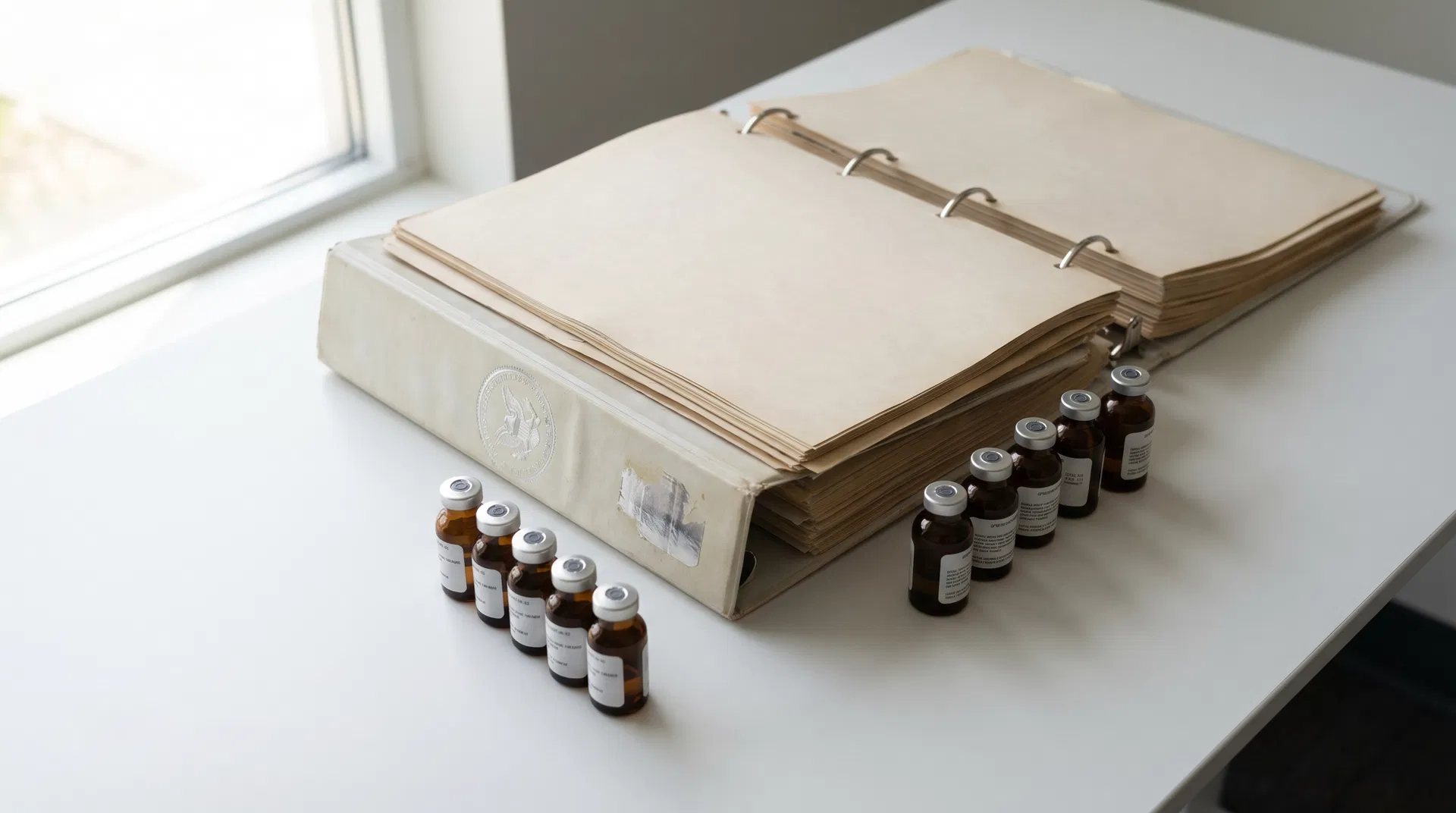
For the past three years, if you wanted BPC-157 or TB-500, you had two options: find a gray market source online and hope it was what the label said, or go without. That is about to change.
On April 16, 2026, the FDA announced it is scheduling a pair of advisory committee meetings to review whether to reclassify 12 peptides that the Biden administration banned from compounding pharmacies in September 2023. The first meeting is set for July 23 and 24, 2026. A second meeting covering five additional peptides will follow by February 2027. This is a significant regulatory shift, and if you are on any kind of performance, recovery, or longevity protocol, you need to understand what is happening and why it matters.
Here is what the Biden administration did in 2023 and why it matters now. In September of that year, the FDA designated 19 peptides as Category 2 substances, a classification that prohibited compounding pharmacies from producing them. The reasoning was that these peptides had not gone through the full FDA drug approval process and posed what the agency described as "significant safety risks."
The practical effect was immediate. Compounding pharmacies, which had been producing these peptides for practitioners and patients with specific clinical needs, had to stop. Patients who had been using BPC-157 for gut healing, TB-500 for tissue repair, or ipamorelin for growth hormone support suddenly had no regulated source. The demand did not disappear. It moved underground.
The July 23-24 advisory committee meeting will take up seven peptides. A second meeting, scheduled before February 2027, will cover five more. The full list of 12 being considered for reclassification includes the most widely used peptides in the biohacking and performance medicine space.
BPC-157 is the one getting the most attention. It is a 15-amino-acid peptide derived from a protein found in human gastric juice. Practitioners have used it for gut lining repair, tendon healing, and inflammation reduction. The FDA is specifically considering it for ulcerative colitis, which gives it a clearer clinical application than most of the others on the list.
TB-500 is the synthetic version of Thymosin Beta-4, a naturally occurring peptide involved in tissue repair and regeneration. It has been used by athletes and practitioners for injury recovery, particularly for tendons, ligaments, and muscle tears.
The others on the list include ipamorelin, MOTs-C, and several additional peptides that have become popular through the biohacking community and, more recently, through the MAHA movement led by HHS Secretary Robert F. Kennedy Jr.
Understanding why this is happening now requires looking at the political shift that made it possible. Kennedy has been vocal about peptides for months. In February 2026, he told podcaster Joe Rogan that he is a "big fan" of peptides and has taken them himself. He has argued that the Biden administration overstepped when it banned them and that the restriction drove users to a black market with no quality controls.
Kennedy called the reclassification review "a long-overdue action to restore science, accountability and the rule of law." He added that the move "begins to restore regulated access and will immediately begin shifting demand away from the black market."
The telehealth company Hims and Hers, which built a significant business around compounded GLP-1 medications during the Ozempic shortage, also welcomed the move. CEO Pat Carroll said the FDA's action is "an important step toward moving these treatments out of the gray market, and into more trusted channels overseen by vetted healthcare professionals."
That framing matters. The argument is not that these peptides are proven drugs with decades of clinical trials behind them. The argument is that regulated access through compounding pharmacies is safer than the alternative, which is people buying unverified peptides from overseas suppliers with no oversight.
The science is promising but incomplete, and you need to be honest with yourself about that. BPC-157 has a substantial body of animal research showing accelerated healing of tendons, ligaments, and gut tissue. Human clinical trials are limited. TB-500 has similar animal data and a strong anecdotal record in the athletic and performance medicine community. The clinical trial infrastructure simply has not caught up with the demand.
The FDA's concern is legitimate. Unproven does not mean ineffective, but it also does not mean safe. There are documented reports of adverse effects with some of these compounds, particularly when sourced from unregulated suppliers. The compounding pharmacy model, with its quality controls and practitioner oversight, is genuinely safer than what most people have been doing.
The honest position is this: the research is promising enough that the risk-benefit calculation favors regulated access for patients working with knowledgeable practitioners, especially for conditions like gut healing and tissue repair where conventional options are limited. It does not favor self-dosing based on a YouTube video.
What this means for your protocol depends on where you are right now. If you are currently using peptides sourced from gray market suppliers, the reclassification process creates a path to getting them from a licensed compounding pharmacy with quality testing, proper dosing guidance, and a practitioner relationship. That is a meaningful upgrade in safety.
If you have been avoiding peptides because of the regulatory uncertainty, the July meeting is worth watching. The FDA's advisory committee historically follows the recommendations of its outside experts, and the structure of these meetings suggests the agency is moving toward reclassification, not away from it.
If you are on a GLP-1 medication like Ozempic or Wegovy, BPC-157 is particularly relevant. GLP-1 drugs suppress appetite aggressively, which means most patients are not eating enough protein and are losing muscle alongside fat. BPC-157 has shown potential for supporting gut lining integrity, which is often compromised in people who are dramatically reducing food intake. This is an area where the nutrition-peptide intersection is most clinically interesting.
Here is the part that does not change regardless of what the FDA decides. Peptides are not a replacement for a nutrition protocol that matches your biology. BPC-157 does not repair a gut that you are continuing to damage with inflammatory foods. TB-500 does not rebuild tissue in a body that is protein deficient. Ipamorelin does not optimize growth hormone in someone who is sleep deprived and eating processed carbohydrates at every meal.
The practitioners who get the best results with peptides are the ones who treat them as an amplifier, not a foundation. They build the nutrition protocol first. They address the sleep, the protein intake, the micronutrient gaps. Then they add peptides to accelerate what the body is already trying to do.
That is exactly the approach that Nutritional Value AI is built around. Your protocol starts with your biology, your current medications, your goals, and your specific gaps. Peptides, if they are part of your plan, get layered in on top of a foundation that actually supports them.
The July 23-24 meeting is the first real signal of where this is going. The FDA rarely convenes advisory committees under the current administration, which makes this meeting notable. The outside experts appointed to the panel will review the available evidence on all seven peptides and make recommendations. The FDA almost always follows those recommendations.
If the committee votes to reclassify, compounding pharmacies could resume production relatively quickly. If they vote to maintain the restrictions, the five peptides scheduled for the February 2027 meeting may still have a path forward.
The regulatory landscape for peptides has been in flux for three years. It looks like it is finally moving toward resolution. Stay informed, work with a practitioner who understands both the science and the regulations, and make sure your nutrition foundation is solid before you add anything on top of it.
---
Ready to build the nutrition foundation that makes everything else work better? Get your personalized protocol at Nutritional Value AI. It takes about 10 minutes and it is built around your specific biology, not a generic template.
#peptides#BPC-157#TB-500#FDA#compounding pharmacies#MAHA#RFK Jr#ipamorelin